
News Update
Full Report: From Maduro’s Controversies to U.S. Capture in Caracas Raid – Venezuela Under Oversight

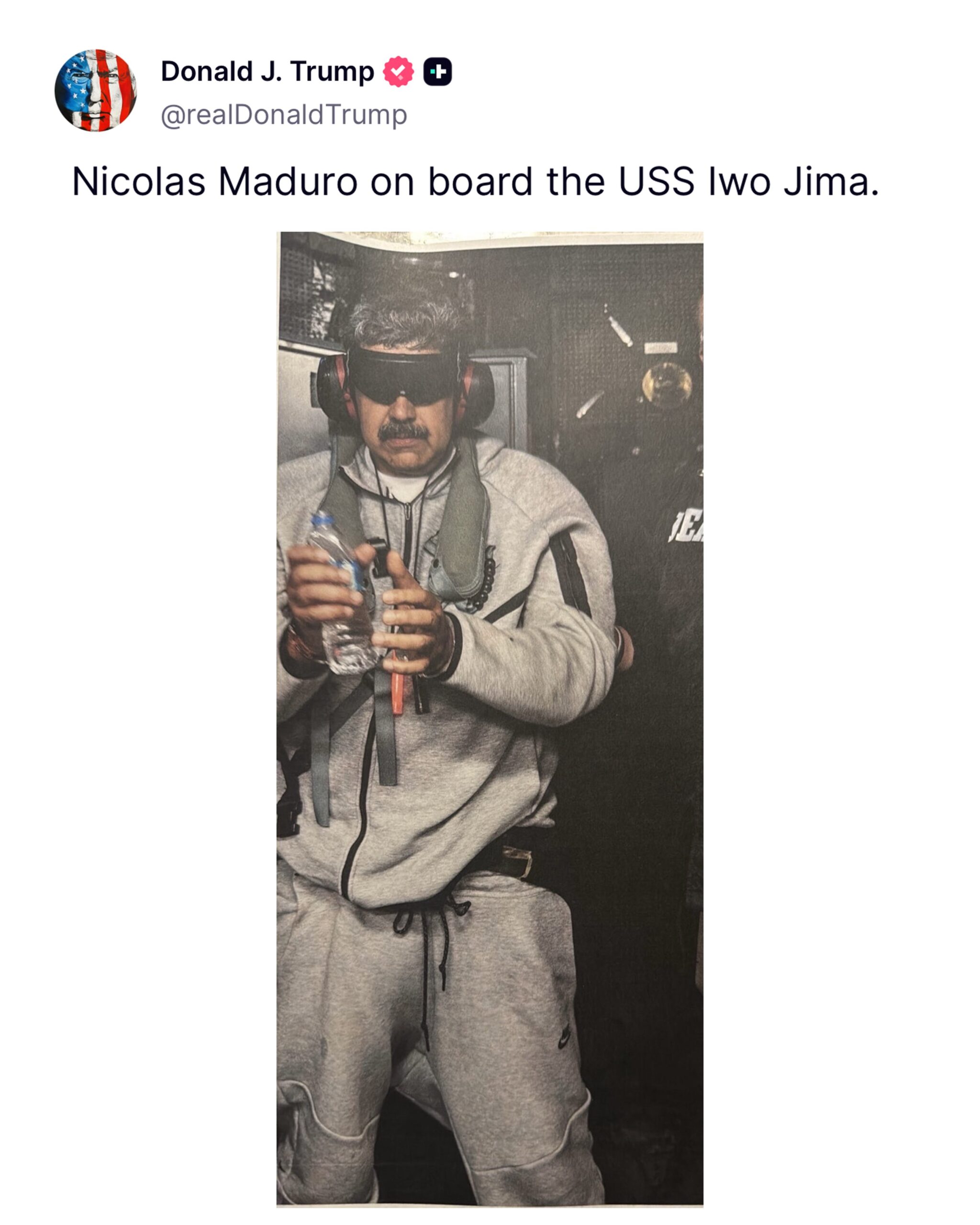
Date of Report: January 3, 2026
Overview: In a dramatic escalation of U.S.-Venezuela tensions, American forces conducted a large-scale air, land, and sea operation on January 3, 2026, capturing Venezuelan President Nicolás Maduro and his wife, Cilia Flores, in Caracas. President Donald Trump announced the U.S. will oversee Venezuela until a “safe, proper, and judicious transition” to democracy can occur, marking a bold intervention amid years of accusations against Maduro for human rights abuses, election fraud, economic mismanagement, and alleged drug trafficking. This report chronicles Maduro’s “sins” – the controversies that defined his rule – leading up to the raid, based on historical context, international reports, and today’s developments. The capture ends Maduro’s 13-year presidency, which began in 2013 and devolved into authoritarianism, but raises questions about sovereignty and regional stability. U.S. forces during the raid on Caracas, capturing Maduro amid strikes on key sites.
Maduro’s Rise: From Chavez’s Heir to Controversial Leader
Nicolás Maduro Moros, born November 23, 1962, in Caracas, started as a bus driver and union leader before entering politics under Hugo Chávez’s socialist “Bolivarian Revolution.” As Chávez’s Vice President (2012–2013), Maduro inherited the presidency upon Chávez’s death from cancer on March 5, 2013. He won a disputed snap election in April 2013 with 50.6% of votes, amid fraud allegations from opposition leader Henrique Capriles.
Maduro promised to continue Chávez’s policies of wealth redistribution via oil revenues, but his rule quickly unraveled due to falling oil prices, U.S. sanctions, and internal mismanagement.
Maduro’s “Sins”: Key Controversies and Abuses
Maduro’s tenure was marred by allegations of corruption, repression, and economic sabotage, earning him international condemnation as a “dictator.” Here’s a breakdown:
- Economic Collapse and Hyperinflation (2013–2026): Maduro’s price controls and nationalizations led to Venezuela’s GDP shrinking 75% since 2013, with hyperinflation peaking at 1.7 million% in 2018. Over 7.7 million Venezuelans fled as refugees due to shortages of food, medicine, and basics, creating Latin America’s worst migration crisis. Critics accused him of embezzling billions through PDVSA (state oil company), with U.S. indictments labeling him a “narco-terrorist” for allegedly flooding America with cocaine via the “Cartel of the Suns.”
- Election Fraud and Political Repression (2017–2024): Maduro’s 2018 re-election with 67.8% was boycotted by opposition and deemed illegitimate by over 50 countries, leading to Juan Guaidó’s self-declaration as interim president in 2019. In 2024, Maduro claimed victory with 51% in another disputed vote, sparking protests where security forces killed dozens and arrested thousands. Human Rights Watch documented over 15,000 arbitrary arrests and 300 extrajudicial killings since 2014. The ICC investigated Maduro for crimes against humanity in 2021.
- International Alliances and Sanctions Evasion: Maduro aligned with Russia, China, Iran, and Cuba to bypass U.S. sanctions imposed since 2017, which targeted his regime for corruption and rights abuses. He allowed Russian mercenaries (Wagner Group) and Iranian drones into Venezuela, escalating tensions. Accusations of gold smuggling and crypto schemes (Petro coin) further isolated him.
- Human Rights Violations: Maduro’s government was accused of torture, forced disappearances, and suppressing dissent, with the UN reporting over 5,000 killings by security forces in “anti-crime” operations. His wife, Cilia Flores, faced sanctions for nepotism and aiding repression as a key PSUV figure. Protests against Maduro’s regime in Caracas, highlighting widespread dissent.
Escalating U.S.-Venezuela Tensions Leading to the Raid
U.S.-Venezuela relations deteriorated under Maduro, with Trump (2017–2021) and Biden (2021–2025) administrations imposing over 300 sanctions. The U.S. indicted Maduro on narco-terrorism in 2020, offering $15 million for his capture. Failed attempts like Operation Gideon (2020) – a mercenary raid – heightened paranoia. Maduro’s 2024 election fraud and crackdown on protests (300+ deaths) prompted renewed U.S. calls for intervention. Trump’s 2025 re-election intensified rhetoric, leading to today’s operation.
The U.S. Raid and Capture: January 3, 2026
In a swift “air, land, and sea” assault, U.S. forces struck Caracas, turning off lights in the capital and capturing Maduro and Flores at an undisclosed location. Trump announced the capture at a press conference, stating U.S. oversight until a transition: “We’re going to run the country… until a safe, proper, and judicious transition can be arranged.” U.S. oil companies will rebuild Venezuela’s industry. Venezuela labeled it “military aggression.” Scenes from Caracas during the U.S. raid, with explosions and military presence.
Global Reactions and Future Outlook
Reactions are mixed: U.S. allies praise the move as ending tyranny; Russia, China, and Iran condemn it as imperialism. The UN calls for dialogue. Venezuela’s opposition celebrates, but fears chaos loom. Maduro’s capture could end his era of “sins,” but U.S. oversight raises sovereignty concerns.
CivicWire.ng monitors this unfolding story.


World Hepatitis Day 2026: The Legends Reaffirms Commitment to Building Healthier Communities

Alleged Plot to Edge Out Saheed Oladele Sparks Political Storm in Oyo: Questions Mount Over SDP Ticket Amid GSM’s Alleged Influence

SHE SPENT 16 YEARS SAVING LIVES… NOW SHE IS BEGGING FOR HER OWN: Lagos Social Worker Needs Help as ₦45 Million Kidney Transplant Hangs in the Balance

Shocking Claim Rocks Nwoko-Daniels Saga: Hooded Man Alleges Senator Offered ₦5M to Assassinate Estranged Wife Regina – Fact or Fabricated Fury?

MHR 2027: KOK vs OBE – Who Is Truly Fit for the House of Representatives?

Civic Wire Commentary: Ejigbo LCDA’s “Transparency Sign” Raises Questions Over ₦988 Million Road Project

Blord Launches “RATEL” App in Epic Shade to VeryDarkMan – The Full Naija Beef Update!

Edo Governor’s Supporter Claims “No Revenue” Amid Road Inspection Drama

MC Oluomo Stumbles Over Words in Viral NURTW Speech Video – The Full Gist! 🔥😭
-
 Entertainment10 months ago
Shocking Claim Rocks Nwoko-Daniels Saga: Hooded Man Alleges Senator Offered ₦5M to Assassinate Estranged Wife Regina – Fact or Fabricated Fury?
-
 LGA/LCDA Updates10 months ago
MHR 2027: KOK vs OBE – Who Is Truly Fit for the House of Representatives?
-
 LGA/LCDA Updates9 months ago
Civic Wire Commentary: Ejigbo LCDA’s “Transparency Sign” Raises Questions Over ₦988 Million Road Project
-

 LGA/LCDA Updates10 months ago
100 Days of Promise and Progress: Ejigbo LCDA Chairman Hon. Taoreed Aare Taiwo (TAT) Celebrates Milestones with Community Empowerment and Infrastructure Push
-

 News Update10 months ago
Exclusive: ICPC and Works Ministry Launch Massive Nationwide Audit of 760 Federal Road Projects Worth ₦36 Trillion – A Deep Dive into Transparency Push
-

 LGA/LCDA Updates5 months ago
FALANA ROAD WAR ERUPTS AS GAJ EXPOSES ‘FALSE CLAIMS,’ ACCUSES OBE CAMP OF BLOCKING MAJOR EJIGBO PROJECT
-
 LGA/LCDA Updates3 months ago
SHE SPENT 16 YEARS SAVING LIVES… NOW SHE IS BEGGING FOR HER OWN: Lagos Social Worker Needs Help as ₦45 Million Kidney Transplant Hangs in the Balance
-
LGA/LCDA Updates10 months ago
Report: The ICPC Petition Against Monsuru Oloyede Bello (Obe) – Social Media Dynamics and Civic Discourse in Ejigbo LCDA
If you are looking for big wins and exciting slots, this is the place. I just hit a decent jackpot this morning! Highly recommend mambawinslot