
News Update
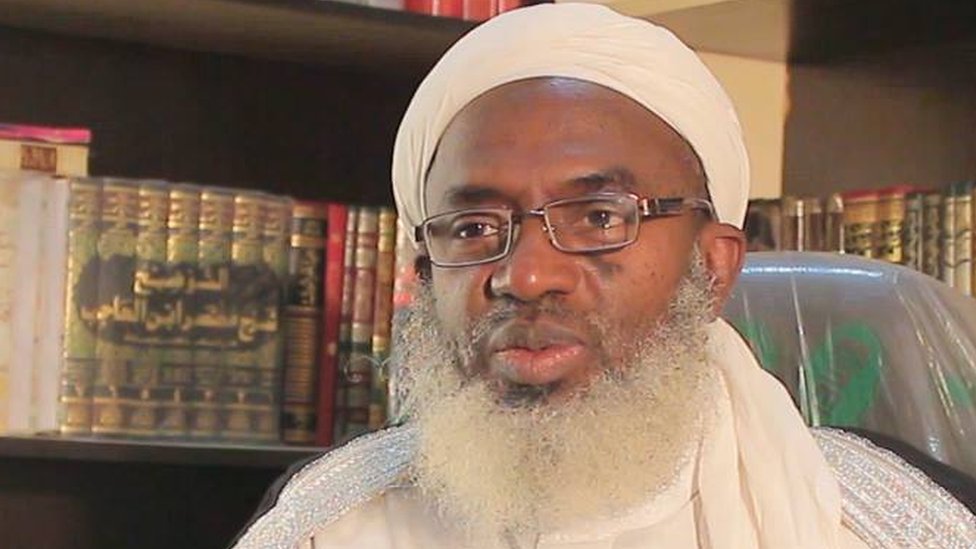
Sheikh Gumi’s Controversial BBC Interview: Full Transcript and Key Insights

December 9, 2025
In a wide-ranging and highly controversial interview with the BBC aired today, prominent Nigerian Islamic cleric Sheikh Ahmad Gumi reiterated his long-standing advocacy for negotiating with bandits amid Nigeria’s escalating insecurity crisis. The interview, conducted amid the recent mass abduction of over 300 students and teachers in Niger State, has sparked widespread outrage for Gumi’s remarks describing child kidnappings as a “lesser evil” compared to the killing of soldiers.
Gumi, a former army captain turned scholar, has positioned himself as a mediator in northern Nigeria’s banditry conflicts since 2021. His comments underscore a divide in approaches to the crisis: military action versus dialogue. Below is the full transcript of the interview, compiled from BBC excerpts and verified reports. (Note: The interview was conducted in English; minor edits for clarity have been applied where direct quotes overlap across sources.)
Full Transcript: Sheikh Ahmad Gumi’s BBC Interview
BBC Interviewer: Sheikh Gumi, thank you for joining us. Let’s start with the recent kidnappings in Niger State—over 300 students and teachers taken by bandits. What is your message to the families?
Sheikh Gumi: It’s an evil, and we pray that they escape.
BBC Interviewer: You pray that they escape? That’s all? These are children as young as six, held in harsh conditions in the forests.
Sheikh Gumi: Yes. It’s an evil act, unacceptable. But we must understand the context.
BBC Interviewer: You’ve previously described kidnapping schoolchildren as a “lesser evil” than killing soldiers. Can you explain that?
Sheikh Gumi: I think part of it is correct and part of it is wrong. Saying that kidnapping children is a lesser evil than killing your soldiers—definitely it is lesser. Killing is worse, but they are all evil. Not all evils are of the same power, so it’s a lesser evil. For example, what happened in Kaduna? They abducted children, and they were released. They didn’t kill them. So it’s a lesser evil than, like, what happened in Kebbi. They abducted children, and they were released. They didn’t kill them.
BBC Interviewer: But these acts traumatize families and communities. How can you rank them?
Sheikh Gumi: They’re all evil, yes. But in terms of gravity, taking life is worse. Kidnapping, though wrong, is less severe when the children are released safely. We condemn it fully, but to end the bloodshed, we need practical steps.
BBC Interviewer: You’ve long advocated negotiating with bandits. The government says it doesn’t negotiate with terrorists. What’s your response?
Sheikh Gumi: They say we don’t negotiate with terrorists. That word, I don’t know where they got it from. It’s not in the Bible. It’s not in the Quran. In fact, it’s not even in practice. Everybody is negotiating with bandits—against outlaws, non-state actors. America had an office where they were negotiating with the Taliban in Qatar. Everybody was negotiating. So where do they get that knowledge from? We negotiate for peace and our strategic interests. If negotiation will bring stoppage of bloodshed, we do it. Negotiating with bandits is not forbidden in the Bible or Quran—it’s a way to prevent greater evil.
BBC Interviewer: You personally engaged with bandit groups in the forests back in 2021. What happened after that?
Sheikh Gumi: The last time I went in to negotiate and speak with them was in 2021. What we were doing—I mean, the federal government… The states were keen. The federal government was not keen. So they declared them terrorists, and since that declaration of terrorism, okay, we disengaged completely from every contact with them. My engagements were open, with authorities present. I worked to unite factions, but the government wasn’t supportive.
BBC Interviewer: Do you still have contacts with these groups?
Sheikh Gumi: No, not since the designation. But the crisis persists because we ignore root causes.
BBC Interviewer: On the broader security situation—do you believe the Nigerian military can defeat the bandits?
Sheikh Gumi: Our military cannot win this war against them alone. We need a robust army, a military strong. And it’s holding the nation now. There is nothing holding this nation without the military. It should be equipped. It should be trained. They are ready. But even our role in this civil unrest, in criminality, is 25% kinetic. The rest is government, politics, locals. So we shouldn’t tax our military for more than they can do. Armies struggle against guerrilla fighters—Nigeria is no exception. Where in the world do we want guerrillas? Nowhere. The military lacks the capacity to defeat them through force alone.
BBC Interviewer: So, what is the solution? Are we moving in the right direction?
Sheikh Gumi: Negotiation is unavoidable—it’s a practical strategy to secure peace and save lives. Before our interventions, villages were being wiped out. Now, you hardly hear of mass killings in those areas. On the contrary, we’ve seen the activities spread, but that’s because we stopped engaging. The government must shift from solely relying on force to embracing dialogue.
BBC Interviewer: Who are these bandits, in your view?
Sheikh Gumi: Mostly Fulani herdsmen—not urban Fulani, but rural nomads. They are fighting an existential war. What does their life look like? A nomad lives on cattle. He doesn’t accept his cattle to be multiplying—that is his life. In fact, they inherit it. They will tell you, “This cow I inherited from my grandfather.” It’s tied to survival, cattle rearing. The bandit is not Boko Haram—mostly not. You have to differentiate between them. This is tribal war in some senses, business in others, with bad elements in security systems involved.
BBC Interviewer: You’ve also alleged foreign powers are backing terrorists in Nigeria. Can you elaborate? (Note: This references Gumi’s recent BBC Hausa interview on December 5, 2025.)
Sheikh Gumi: Yes, some powerful foreign governments are secretly backing these networks. Recent patterns of attacks suggest external support. Look at Birnin Gwari in Kaduna—farmers returned to their lands, peace was taking root. Then suddenly, escalations. Such reversals aren’t random. There are forces from outside influencing this. The government must intensify intelligence, diplomacy, and scrutinize external links. Until we uncover these connections, the crisis will cycle.
BBC Interviewer: Final thoughts on ending this?
Sheikh Gumi: Address root causes—poverty, marginalization, existential threats to nomads. Combine military strength with negotiation and politics. Otherwise, we’ll continue losing lives.
(End of interview. Runtime: Approximately 15 minutes.)
Analysis and Reactions
Gumi’s remarks have ignited fierce debate. Critics, including security experts and victims’ families, accuse him of downplaying child abductions and sympathizing with criminals. “How can a cleric rank the trauma of kidnapped children as ‘lesser’?” one parent from Niger State told CivicWire.ng. Supporters argue his push for dialogue aligns with global precedents, like U.S.-Taliban talks, and could save lives in a conflict claiming thousands annually.
The interview coincides with heightened bandit activity, including the Niger abductions where over 100 remain captive. Nigeria’s government has rejected negotiation, opting for an “emergency security plan” under new Defence Minister CG Musa. Gumi’s past forest visits (2019–2021) reportedly reduced killings in some areas but ended after bandit groups were proscribed as terrorists.
CivicWire.ng will continue monitoring developments. What do you think—dialogue or crackdown? Share your views in the comments.
Sources: BBC Hausa/English broadcasts, verified via multiple Nigerian outlets including Tribune Online, Punch NG, and Daily Trust. For video clips, visit BBC.com/news.









World Hepatitis Day 2026: The Legends Reaffirms Commitment to Building Healthier Communities

Alleged Plot to Edge Out Saheed Oladele Sparks Political Storm in Oyo: Questions Mount Over SDP Ticket Amid GSM’s Alleged Influence

SHE SPENT 16 YEARS SAVING LIVES… NOW SHE IS BEGGING FOR HER OWN: Lagos Social Worker Needs Help as ₦45 Million Kidney Transplant Hangs in the Balance

MHR 2027: KOK vs OBE – Who Is Truly Fit for the House of Representatives?

Shocking Claim Rocks Nwoko-Daniels Saga: Hooded Man Alleges Senator Offered ₦5M to Assassinate Estranged Wife Regina – Fact or Fabricated Fury?

100 Days of Promise and Progress: Ejigbo LCDA Chairman Hon. Taoreed Aare Taiwo (TAT) Celebrates Milestones with Community Empowerment and Infrastructure Push

Blord Launches “RATEL” App in Epic Shade to VeryDarkMan – The Full Naija Beef Update!

Edo Governor’s Supporter Claims “No Revenue” Amid Road Inspection Drama

MC Oluomo Stumbles Over Words in Viral NURTW Speech Video – The Full Gist! 🔥😭
-
 LGA/LCDA Updates8 months ago
MHR 2027: KOK vs OBE – Who Is Truly Fit for the House of Representatives?
-
 Entertainment8 months ago
Shocking Claim Rocks Nwoko-Daniels Saga: Hooded Man Alleges Senator Offered ₦5M to Assassinate Estranged Wife Regina – Fact or Fabricated Fury?
-
 LGA/LCDA Updates8 months ago
100 Days of Promise and Progress: Ejigbo LCDA Chairman Hon. Taoreed Aare Taiwo (TAT) Celebrates Milestones with Community Empowerment and Infrastructure Push
-

 LGA/LCDA Updates8 months ago
Report: The ICPC Petition Against Monsuru Oloyede Bello (Obe) – Social Media Dynamics and Civic Discourse in Ejigbo LCDA
-

 LGA/LCDA Updates8 months ago
Ejigbo LCDA Vice Chairman, CDC Secretary to Grace WRICAD’s Community Campaign Against Digital Abuse
-

 LGA/LCDA Updates7 months ago
Civic Wire Commentary: Ejigbo LCDA’s “Transparency Sign” Raises Questions Over ₦988 Million Road Project
-

 LGA/LCDA Updates3 months ago
FALANA ROAD WAR ERUPTS AS GAJ EXPOSES ‘FALSE CLAIMS,’ ACCUSES OBE CAMP OF BLOCKING MAJOR EJIGBO PROJECT
-

 Entertainment8 months ago
English Premier League: Arsenal regains 5-point lead as struggling Liverpool drops more points at Anfield
Thanks for sharing. I read many of your blog posts, cool, your blog is very good. https://www.binance.info/sl/register?ref=GQ1JXNRE
Can you be more specific about the content of your article? After reading it, I still have some doubts. Hope you can help me. https://accounts.binance.com/register-person?ref=QCGZMHR6
Thanks for sharing. I read many of your blog posts, cool, your blog is very good.
Your point of view caught my eye and was very interesting. Thanks. I have a question for you.